
On October 20, 2024, the inaugural season of WorldWCR finished all its competitions and saw Ana Carrasco being crowned the first ever FIM Women’s Circuit Racing World Champion. When it was announced, the FIM Women’s Motorcycling World Championship promised to be an electrifying addition to the world of motorsport, showcasing the immense talent and dedication of women in the field. Now the first season is done and dusted, what has the WorldWCR brought us? Here’s our two cents.
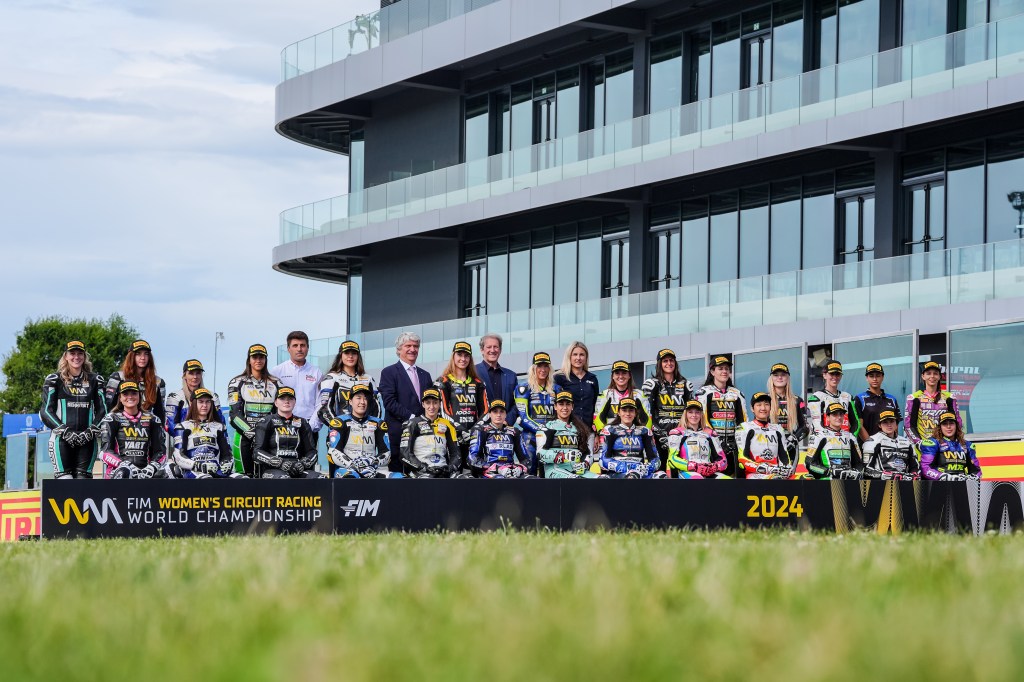
All photos © Dorna WSBK Organization Srl
There was a time when an all-female racing series was frowned upon, whether it was on four wheels or two wheels, especially by top female drivers/riders who have proved themselves among the guys. The W Series, F1 Academy, Women’s European Cup (to a lesser extent as it’s a regional series) all went through the process. But as more all-female series were organized, and as they got closer and closer to the ‘official’ organizations, the narrative started to change.
When WorldWCR was first announced, like every other series, there were arguments against it. But as the FIM and Dorna pushed on, there was no stopping it of course. When the provisional entry list was announced, what we knew for certain was, Ana Carrasco, the 2018 WorldSSP300 World Champion was clearly not against it, the FIM and Dorna found their biggest possible ally for the series. But then there was the new and more crucial question for the series – isn’t the world champion just going to run away with it? How do you prevent it from becoming the Ana show?

Dorna presented the solution before the first race – they brought in Ana’s nemesis – Maria Herrera. Back in 2015, they were the only two women in Grand Prix racing (in the Moto3 full-time line-up, Ana from 2013 to 2015, Maria in 2015 and 2016), and for the longest time, they were the face of the women’s circuit racing. Now we were guaranteed a two way fight. But we ended up with more than that.
The Duel
Maria opened the season with a very strong weekend at Misano, leaving the first round with 14 points ahead of Ana. Then in the next two rounds, the two each took one win each weekend, with Maria still keeping a lead of 7 points going into Cremona. Then the turn of events came at Cremona, with Sara Sanchez taking out Maria Herrera in race 2, Ana took the championship lead for the first time with two rounds and four races remaining. Then Estoril was still not exactly Maria’s weekend, she had a mechanical failure in race 1 and had to start the race from the back of the grid. After the Estoril round, Maria managed to keep the deficit at 18 points.

Going into the final round, the championship was Ana’s to lose. She’d never been off the podium in the past ten races. If she could continue this momentum, then she would claim the title no matter what Maria could do in the final two races. Maria took the win of race 1, closing the gap to 13 points, but this was still not enough.
In the final race, there was a point when Maria was leading the race and Ana was in fifth. This would give Maria the title with only one point separating her from Ana. But in the last lap, Sara Sanchez took the lead and Maria crashed out when trying to reclaim the lead. Ana Carrasco became the first ever WorldWCR World Champion. The Pink Worrier made history again.

The Quartet
Ana and Maria delivered what was expected. Their title fight went from the very first lap of the season to the very last lap. What surprised us more, or the bigger value of the series, lies in what happened around and behind them.
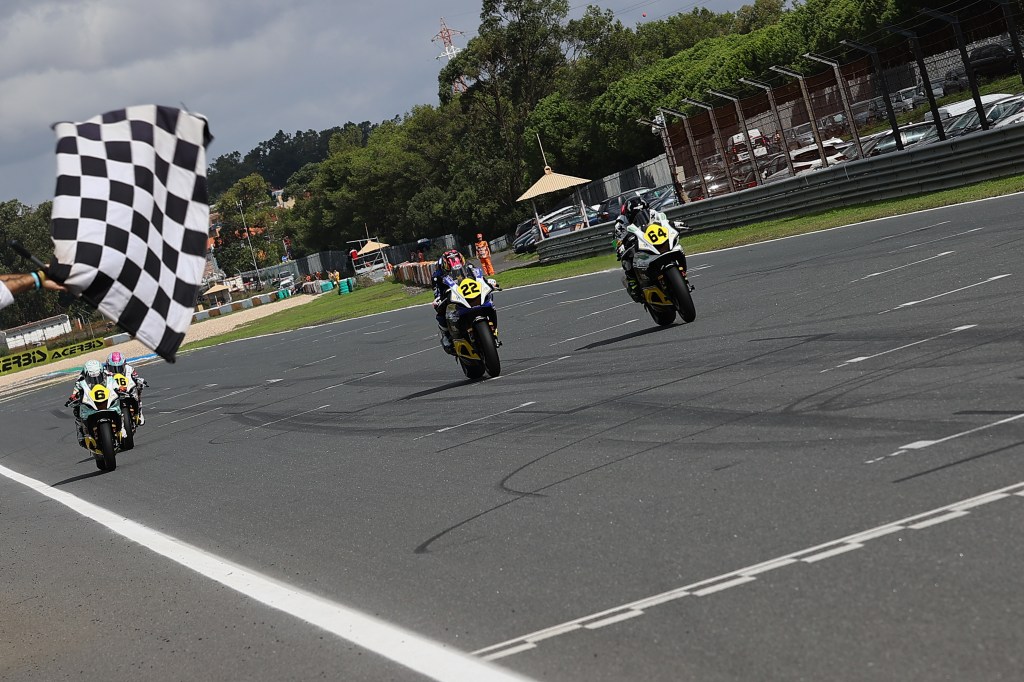
Before the season kicked off, just off of the entry list, we knew Beatriz Neila, Sara Sanchez, Roberta Ponziani, and Jessica Howden could all be formidable forces to challenge for podium positions and that final place in the top 3 of the season. They had all been competitive in the Women’s European Cup, but of course, they raced on different 300cc bikes in the European Cup and in WCR they would race Yamaha R7 as a single-make. They would all learn new circuits. They would also all face the pressure of racing in a world championship against Ana Carrasco and Maria Herrera.

During the season, Sara Sanchez and Beatriz Neila have been mostly capable of taking the fight to the top 2 or at least holding their ground, with Sara Sanchez even being the only race winner outside of Ana and Maria, taking not only one, but two race wins. Sara Sanchez also achieved the highest number of fastest laps and even managed to maintain the mathematical possibility of claiming the title before going into the final round. Roberta Ponziani was able to shine at her home round, taking a podium in race 2 at Cremona, and she was also in the mix to fight for the podium in the final race at Jerez. Jessica Howden, though coming with enough talent and capability, lacked a bit of luck this season, didn’t even make it into the top 10 in the championship.

A Strong Field
Then there’s the rest of the field not so well known in the world, or at least, for casual viewers. For a lot of them, this is their first time on the international stage and it’s the world championship grid. Some of them delivered quite strong results – Pakita Ruiz from Spain (not too surprising given her nationality), Tayla Relph aka the only other podium finisher from Austrlia, and Astrid Madrigal from Mexico.
In the entire season consisting of six rounds and twelve races, 33 female riders competed in the championship (24 of them not from Spain or Italy) and 25 of them scored points, with wildcard entrances like Chloe Jones and Avalon Lewis giving quite stunning performances in their only round of appearance.

In its inaugural season, the WorldWCR presented a grid ranging from riders born in 1981 to riders born in 2005. This is the same problem the W Series faced – if we can call it a problem – for a feeder series, the riders in the series are not young enough. With the minimum age requirement set at 18, the WorldWCR riders are not young compared to the hotshots in Moto3 or JuniorGP, considering where top riders from these championships will end up (they are not even young compared to Fermin Aldeguer, born April 2005, who made his MotoGP debut at the official Barcelona test last week). So let’s for now focus on how the riders perform on the younger end of WorldWCR. We’ve had some great talents in this aspect even though not in an abundant amount. Czech rider Adela Ourednickova, born in 2005, being the youngest of the entire field (with wildcards included), has been able to score points in all ten races in the first five rounds, finishing 13th in the championship with 39 points in total. German rider Lucy Michel and Austrian rider Lena Kemmer, both born in 2004, have been able to each have six point-scoring races, finishing 16th and 22nd respectively in the championship. Wildcard Dominican rider Krystal Silfa, born in 2004, scored one point out of her four races. With more experience and sufficient support, these young riders can surely grow into someone like Ponziani, Sanchez, or even Carrasco soon.
What’s Next?
When we interviewed some of the women on the entry list of WorldWCR, they were all very excited about the series, about the possibilities of being in the world championship racing against the best female riders on this planet. But the WorldWCR is a means to an end, it shouldn’t be the end game, where all female circuit racing riders end up, it should be the stepping stone for them to show their talent in front of the world and move on to WorldSSP and Moto2.
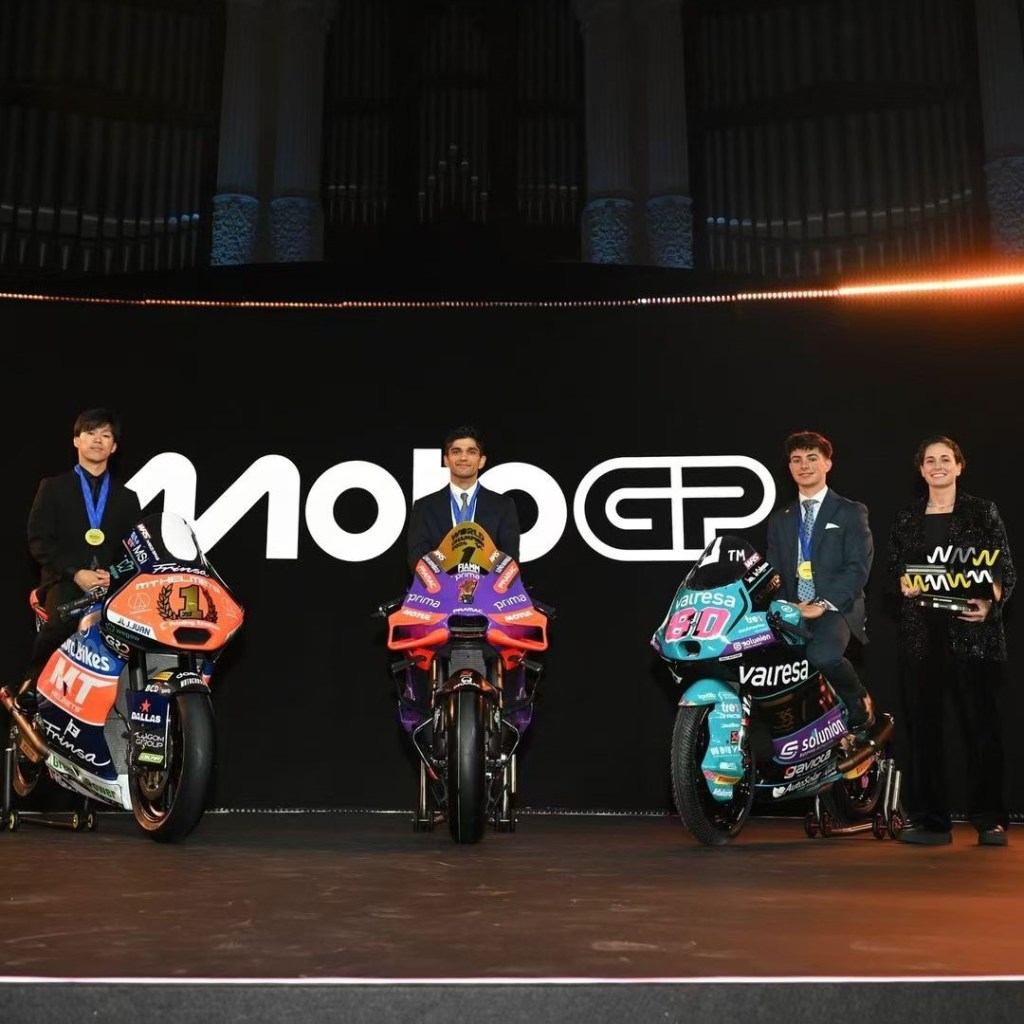
Ana Carrasco and Maria Herrera have already shown their capabilities again and again so they are here to elevate the series and get a title in the process. It was nice for Dorna to invite Ana to the FIM MotoGP Awards after the Solidarity GP of Barcelona to claim her trophy. For the other riders, this is the first time they’ve shone properly in front of so many audiences and on a level playing field. Sara Sanchez has proved she’s just as good as the big two, so what opportunities she can get from here is what makes and breaks the series. If she still doesn’t get a meaningful opportunity against the guys (i.e. a competitive bike in a mixed series), then the series has failed.
Besides taking the women to a new level they were never able to achieve on their own, there is also the exposure of women and encouragement of young girls. As more young girls see women in racing, on the podium, winning races, more young girls will be encouraged to get on minibikes and start their own journey in circuit racing. This effect will not be easy to see as the grass-root level does not get that much coverage, but this will decide the true future of women in circuit racing. We are already seeing some trickling-down effects in Dorna’s ‘Road to MotoGP’ series. First, Spanish rider Alejandra Fernandez Garcia became the fourth female rider to be selected for the Red Bull MotoGP Rookies Cup, then about a month later, Chinese rider CHEN Shiyu became the second female rider to be selected in the full-time line-up of Asia Talent Cup. As the other selection events carry on, we hope to see more girls joining the series that has produced MotoGP riders and World Champions.
Of course, there is also the side of things we need to be cautious about. As mentioned above, the WorldWCR shouldn’t be the end game. Even though for some riders, this is a championship that came up too late in their career, this shouldn’t be a championship young female riders aim for or end their careers in. We can’t emphasize enough that separating men and women in circuit racing is not the correct way to go at the top level, but only a way to give young girls more opportunities to move up. WorldWCR shouldn’t be this little playground circled out for women so they won’t come and mess with the guys. The end is always MotoGP and WSBK, mixed-gender racing. Let’s see what the WorldWCR brings Sara Sanchez and Adela Ourednickova, then we really know what we have here.

 Paddock Sorority
Leave a comment