
On January 12, 2025, after racing over 5,900 kilometers across Morocco, Mauritania, and Senegal, British rider Stephanie Rowe made history by becoming the first female rider to finish the Africa Eco Race. She didn’t just finish the race, she did so in the most challenging category – malle moto (unassisted). Following this history-making achievement, Stephanie now sets her sights on an even greater goal: competing in the 2026 Dakar Rally. We had the opportunity to catch up with Stephanie to talk about her career. Here is her story.

All photos © Stephanie Rowe
Growing up in the UK, motorsport wasn’t such an unfamiliar idea to Stephanie throughout her childhood. After obtaining her motorcycle license at 21, a series of serendipitous events led to her debut in enduro racing. “I’ve always been interested in motorsport whether they are on four wheels or two wheels. I used to hear my dad watching Formula 1 races on Sundays. I’d also help my dad fix his car. When I passed my motorbike license, I started working in a bike shop. I met some friends who would let me try their offroad bikes. At the same time, I saw in a magazine that there was a women’s category in the enduro race. I just thought to give it a go without knowing that it was at the national level. It was completely random that I started racing offroad.”
In enduro, Stephanie quickly discovered her strengths in offroad racing – her endurance. “I used to do long-distance running, and I’ve always liked all sports and competing in sports. In enduros, mostly the races are 3-hour long, and sometimes there would be longer ones which are 6-hour long. I wouldn’t say I was immediately a natural at it, but I felt that my performance was better on the longer races – the 6-hour races.”

Among the most grueling offroad challenges are rally-raid events, with the Dakar Rally standing as the pinnacle of difficulty. Though the Dakar fascinated Stephanie early on, she couldn’t really picture herself on the starting podium of the Dakar at the time. “I went to a presentation by Tamsin Jones in 2012. I’ve heard of the Dakar Rally, and I knew it was this ultimate hardcore offroad racing. It was always an interest for me, but I didn’t think I could do it. It was quite expensive to get into the Dakar Rally, and I started late with motorcycling. It seemed such an unobtainable dream.”
Before Stephanie could get her racing career to a proper place to even think about the Dakar, a severe injury in 2013 threatened to end her motorcycling entirely. Gritting her teeth through the recovery, Stephanie eventually came out of the darkest days and back onto the bikes. “In 2013, I had a bad accident with an adventure bike in Belgium. I was in the hospital for five weeks before I could get back home. I had a complication afterwards. Before I could do the corrective surgery, I spent 20 months having to walk with crutches or a walking stick. I was also in a lot of pain because my knee was in the wrong position. The doctors told me that after the surgery, I should walk again unaided, but never be active again. I felt like my life was over if I didn’t have an active life. After that it was two years of not really knowing what the outcome could be. It was hard to see the light at the end of the tunnel. I kind of accepted that I would never ride offroad again. But I just kept doing the best I could with the recovery, and the doctors were also doing their best with the treatment.”

When I eventually came back to racing, it was like starting from zero again. The accident had completely taken all of my confidence, and my body has got this weakness with the injury.
With the injury, the Dakar seemed even further away from Stephanie. But with encouragement of a rally organizer, when Stephanie was trying to get back into racing in 2017, she opted to start again with rallying. “I met the organizer of a rally on a marketing event for adventure motorcycles. He said he’d seen me ride an adventure bike, and it would be no problem for me in rallying. So I tried it, and I loved the navigation side of it. I also liked the long days, digging deep to keep up the pace. I’m quite mentally strong and I like the requirement of endurance and perseverance.”
Rally-raid is a lot of long days of riding. It’s like there’s some sort of pleasure in the suffering. You feel like you’ve really achieved something at the end of a long day of riding. It’s a strange thing to explain.
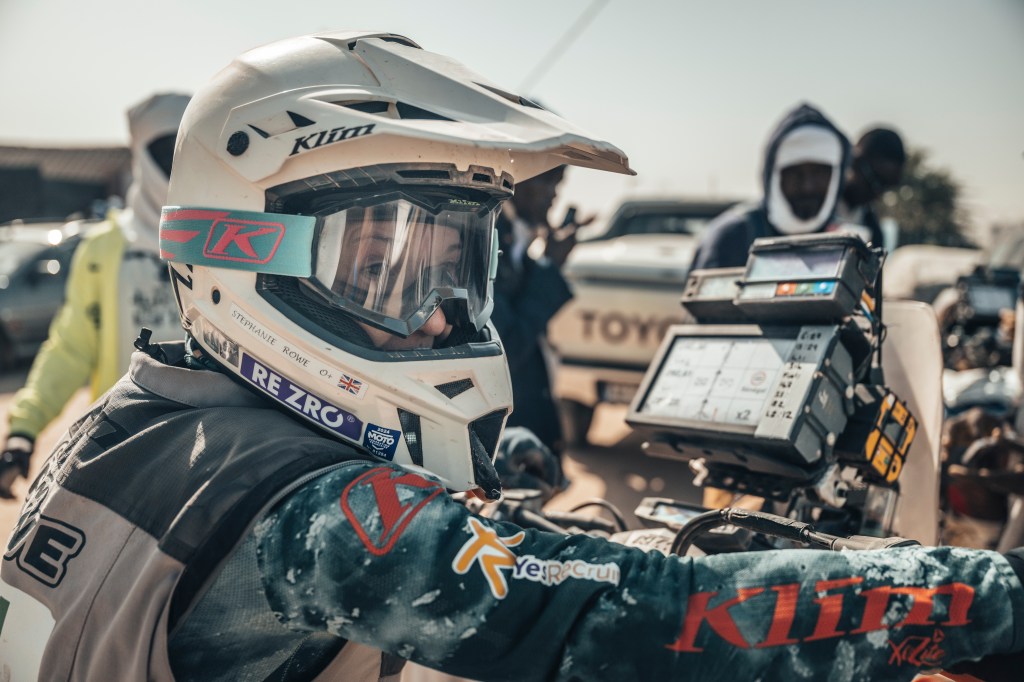
From rallies in Europe, Stephanie steadily built up her skills in rallying. Two year ago, she was ready to get into the desert and to conquer the dunes. “Before I did my first desert rally. I went to train in the dunes because I’ve never ridden in them. You need a lot of speed in the dunes. This is something I’m not very used to. I’m more about slower technical riding with stones and in the woods. So it’s generally faster and a more aggressive style of riding in the desert. You also need to learn to read the dunes and know what lines to take. With the speed you are going at, experience is very important so you can be fast enough in thinking about the direction, and adapting to the right lines when necessary.”
When I did my first desert rally in 2023, I did quite well. I didn’t struggle too much. This is when I started to believe in the capabilities of myself going for the Africa Eco Race and eventually the Dakar. Then it’s just about putting in the hard work and gaining experience through smaller rallies, taking it step by step.
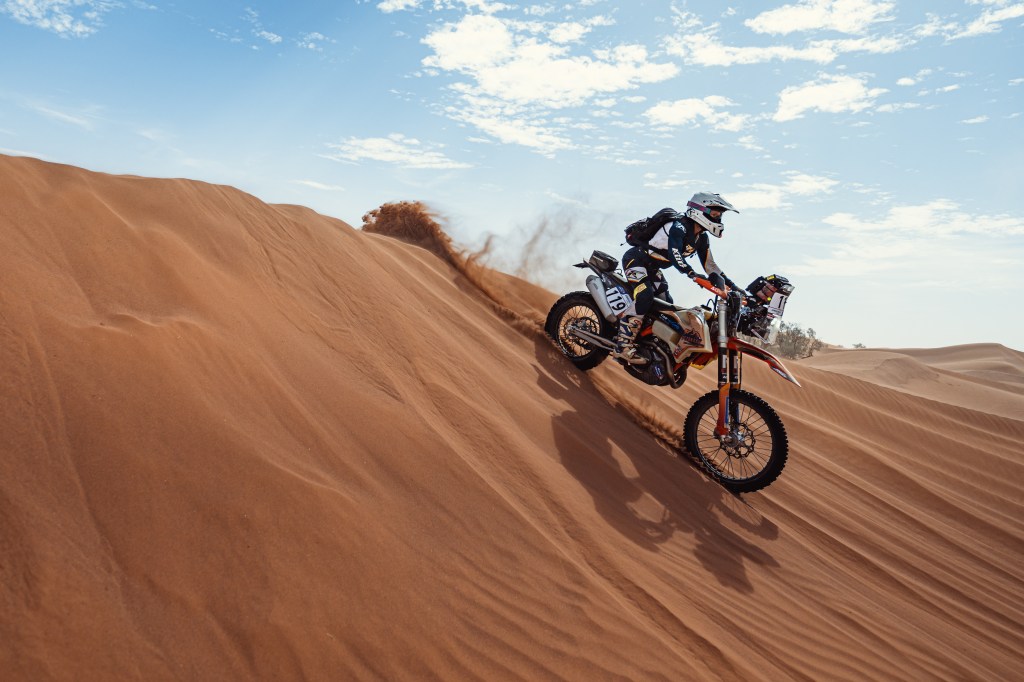
Since Stephanie started racing in the desert, she has always been competing in the malle moto category – the unassisted category, in which it’s only her, her bike, and her equipment vs the vast desert. “In malle moto, it’s more about getting to the finish than getting to a certain result. Especially in something like the Africa Eco Race, it doesn’t matter if I finish 20th or 40th, finishing is the most important thing. One of my proudest moment was in the 2024 Rallye du Moroc. I finished while 20 riders who didn’t even finish the first day, and it was in the World Championship. I know how to manage myself mechanically. But when you have to work on your bike at the end of a long day, it’s extra fatigue on top of everything you’ve endured. It’s about keeping a balance, being organized, and managing yourself.”
For the Dakar though, Stephanie is planning to go with assistance, but also with the aim to one day race in the Original by MOTUL category – Dakar’s unassisted category. “I do want to one day race in the Dakar in malle moto as well. But it’s a much harder race, with very long and technically very tough stages. It’s at World Championship level. On some days in the Dakar, there’s not even 500 meters in your 300-kilometer special stage where you can just breathe.”
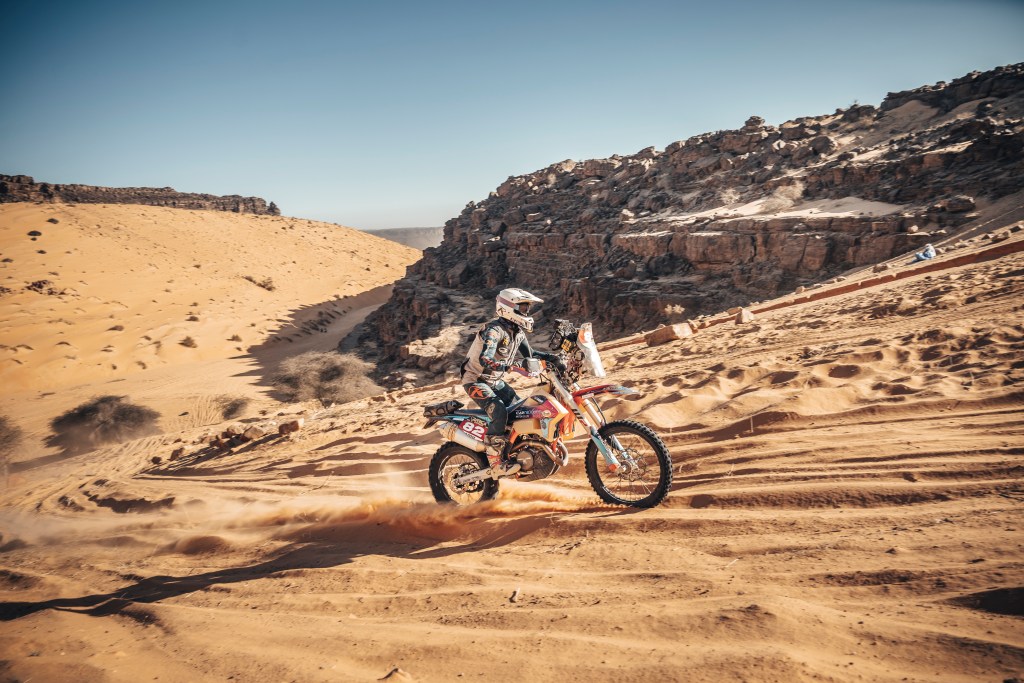
Finishing the Africa Eco Race unassisted gave me the confidence of going for a 2-week rally.
Besides racing and riding herself, Stephanie also works as an instructor and sometimes works for the organizers at rally events, cherishing the camaraderie of the tight-knit rally community. “The rally world is quite small. I have a lot of friends in rally, and we come across each other at different events. I know some professional riders before they went pro. It’s quite nice to see them at these events while I’m working. When I work at the checkpoint, it’s nice being there for your mates knowing that you are the face they see between their grueling journeys. It’s nice to give them the strength and motivation to keep them going through the rest of the stage.”
Even thought there are a lot of competitors in a rally, a lot of times you are riding alone. We are just happy to see a familiar face.
As Stephanie continues her pursuit of the Dakar, her story stands as a testament to grit and passion. We wish her all the best of luck in this extraordinary endeavour and beyond!
 Paddock Sorority
Leave a comment