
Guest blog by Thiemo Albers-Daly
Judit Casimiro Fernandes is a sports psychologist working in the world of motorsport. Fascinated by racing from a young age, her path to where she is now is not a traditional one – and will probably surprise you! We talked about this, why she believes it’s such a good thing for mental health to be talked about more in motorsport, her time working in the communications department for the Circuit de Barcelona Catalunya and more.
I hope you enjoy our conversation.
What first got you interested in Motorsport?
I’ve heard people say that working in motorsport is for nerds, and to be fair, my story kind of fits that description!
As a kid, I’d see my Grandad watching races or highlights from Formula 1 and MotoGP, but I never got into it growing up. My true interest in motorsport began while studying for my master’s in sport psychology. We had a module focused on motorsport, which taught me about the mental preparation required for racing drivers and team members. I remember thinking “Wow, this is actually pretty cool.”
So, I started following the 2021 Formula 1 season and got tickets for the 2022 Spanish GP, which was my first time ever at a racetrack. After loving the experience—and watching far more YouTube content from previous seasons than I’d like to admit—I decided to pursue a career in motorsport.
What attracted you to become a sports psychologist?
Something totally different actually! I used to be a professional dancer and teacher, and I started studying sport psychology part time, with the intention to apply it to dance after what I envisioned to be a long and fun career on stage. Unfortunately, an injury forced me to retire earlier than expected, and I felt the need to explore other fields where I could apply my knowledge. That’s when motorsport entered my life.

We’ve seen more drivers in F1 and beyond this year talk about mental health – let’s talk about this. E.g. Hamilton, Red Bull, Sargeant, etc.
I think it’s fantastic that more drivers are speaking out about mental health. I consider it’s really important to raise awareness not only about the particular challenges that come with a motorsports career, but also the ones we all face as part of the human experience. In past years, we’ve seen Formula 1 drivers starting to publicly share different experiences—some from a more clinical side, others from an athletic performance perspective. And lately, we’ve also seen this happen in other championships, like for example, Jorge Martín, the 2024 MotoGP World Champion.
Overall, I believe we’ve definitely made positive progress compared to 10 years ago, but there’s still a long way to go before mental preparation is seen as a regular part of the training process across all racing categories and levels of development. I hope that in a few years, we’ll see more sport psychologists working closely with the teams and academies—and not just with a few drivers who hire the service, mostly externally from the racetracks.
What do you think about the pressure on young drivers these days?
I’ve seen firsthand how the intense competition and pressure to perform —driven by rising budgets and the pursuit of junior academy spots, for example—can compromise the space young drivers need to grow, make mistakes, and learn.
That’s why I believe everyone involved in these championships should be mindful that the drivers they’re working with are kids who are still in their formative stages—not winning machines or stepping stones to higher championships.
In my opinion, it’s crucial to provide them with a supportive and empowering environment that helps them enjoy their passion, build a solid foundation, unlock their potential and identify areas for continued growth. It’s also equally important to include, from a young age, not just race craft and physical training, but mental and emotional preparation too: building aspects like confidence and resilience so they learn how to handle tough situations, solve problems, and navigate the highs and lows of their careers.
You also work in the Communication Department at the Circuit de Barcelona Catalunya – tell me about this, what this involves and how this compliments your other work.
My first job in motorsports was at Circuit de Barcelona-Catalunya for the 2022 MotoGP race. Since then, I step in whenever the communications team needs support for big events, especially when there’s a lot of media coming. My role there involves making sure the media centre runs smoothly, and that both the championship and the press have everything they need for top-notch media coverage. Lately, I’ve also had the chance to support the circuit’s speaker, co-presenting events like the pit walk and hero walk, which has been such a rewarding experience as well.
Honestly, I couldn’t have asked for a better way to break into motorsport!
The comms team at the circuit feels like home to me. Working with such talented professionals has given me invaluable knowledge about what goes into organizing a race weekend, and has also helped me discover that I love that role too. So yeah, once the official calendar drops for that season, I’m already marking the key race weekends at the Circuit, and the countdown begins!
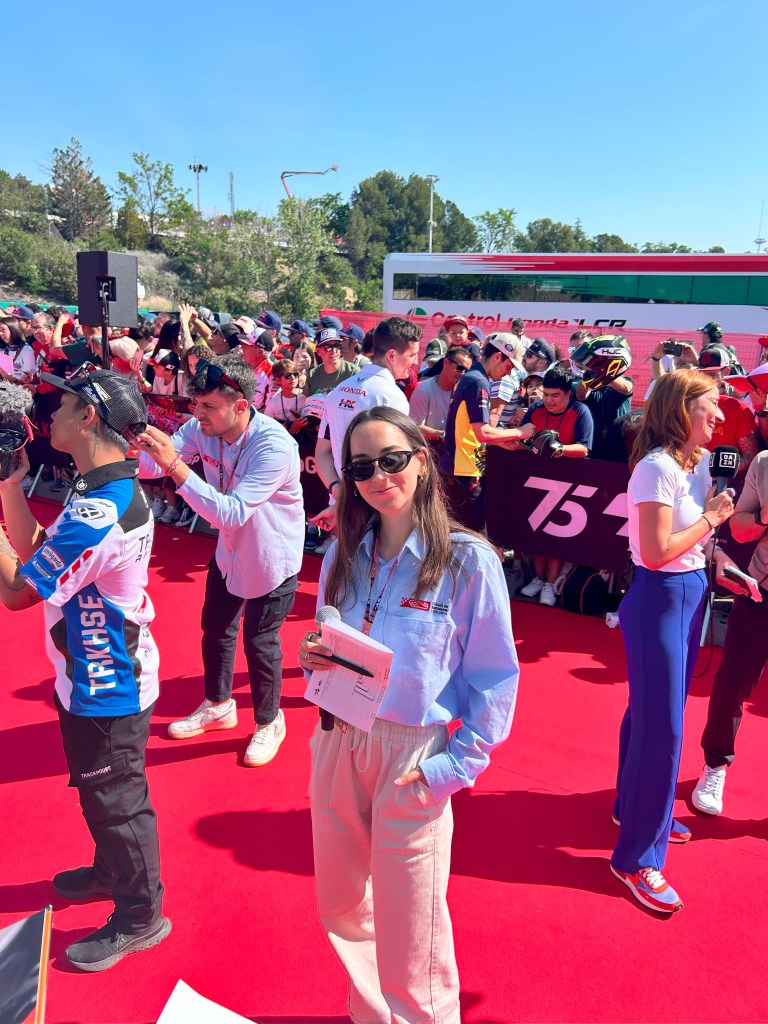
Talk me through a race weekend from your perspective.
Of course, what I actually do changes depending on my role, but one thing that’s always the same is that I try my best to do a good job while also having fun.
I’ve seen how race weekends are long and full of stress for pretty much everyone, so I try to find a balance and make a little bit of time for myself when possible.
Things like getting enough sleep, eating well, staying hydrated, and fitting in some stretching, yoga or anything else that helps me stay grounded. It’s also important for me to play a part in making the paddock a positive place. It’s always great connecting with people, making new friends, having good conversations, learning from their experiences or just sharing funny stories.
What is your favourite film?
Honestly, I have such a hard time choosing favs. I only have a favourite number, 7, and it’s because I copied my Dad when I was a kid. So yeah, I don’t really have a favourite film, but I do love reading books, watching movies/TV shows or going to the theatre.
If you could only eat one food for the rest of your life, what would you choose?
Again, impossible…especially if I need to choose for life! But I guess one thing I really miss when I’m abroad is good bread and healthy, but yummy, vegan options. So, something along those lines!
Thank You to Judit for taking the time to chat.
 Paddock Sorority
Leave a comment